Search…

Mush Myth Busting: Dog Sledding in Montana

Oh what fun it is to ride in an eight dog open sled.

We wedged our way under a comfy, warm blanket and proceeded to have most of our preconceived notions about mushing destroyed… CONTINUE READING >> 

Dog Sled Adventures, Olney, Montana outside of Whitefish

Winter getaways don’t always need to be escapes to warm and sunny tropical locales, sometimes embracing the bracing weather can lead to an incredibly exhilarating adventure.

At Jeff Ulsamer’s Dog Sled Adventures in Olney, Montana we discovered a winter option that we knew we had to try… dog sledding. Oh what fun it is to ride in an eight dog open sled.

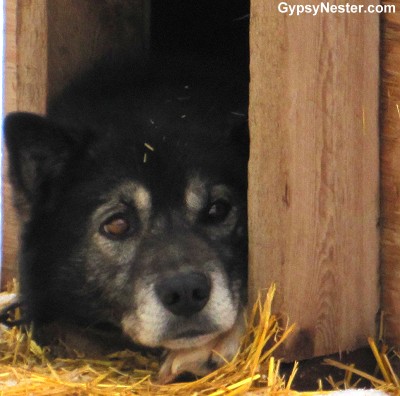
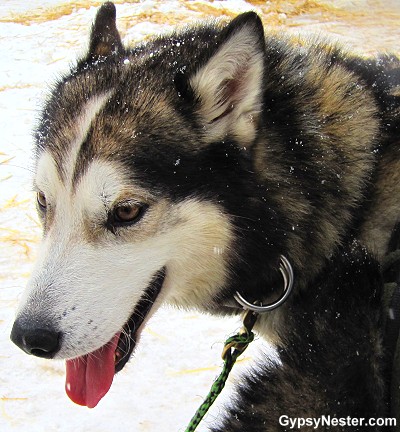
Poor little guy is pouting because he doesn't get to go this time
Poor little guy is pouting because he doesn’t get to go this time.

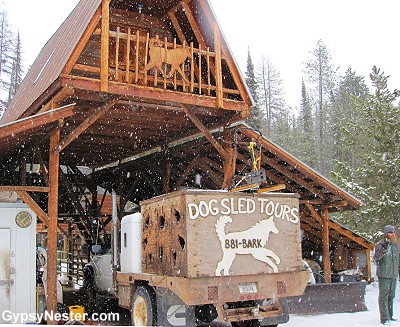
As we walked up to the lodge, over one hundred dogs were barking their brains out. To be exact, one hundred and twenty-four according to Jeff.

He explained that the barking was because the teams were being set up with the sleds, and the dogs that were not chosen to pull were pretty upset. They love their jobs! So we showered some of the unchosen with affection – they are incredibly friendly dogs – and readied ourselves for the run.

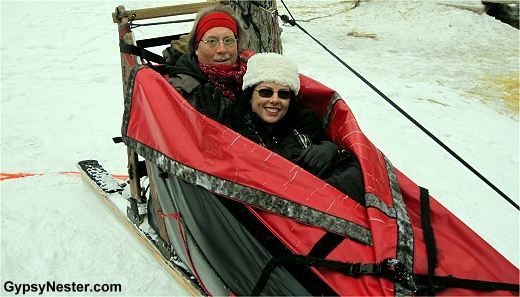
Getting ready to dog sled in Whitefish, Montana!
All warm and cozy and ready to dog sled!

We wedged our way into a comfy, warm sled and proceeded to have most of our preconceived notions about mushing destroyed. Without a word from our driver we were on our way and instantly all of the racket stopped.

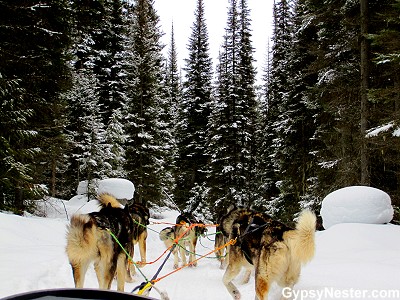
We slid through the forest with surprising speed, and an even more surprising lack of sound. Turns out that the cracking whips, yelling of “mush,” and constant barking of the teams are just movie make-believe. In fact, we’ve never seen so much tail wagging in our lives!

Dog sledding through Stillwater State Forest in Montana

In real life, the dogs respond to subtle signals from the driver. Most of these are made by shifting the sled, but a few are audible, including periodic “good dogs.”

The team also works on feel, knowing when the sled picks up speed down a hill, or to pull harder on the way up one.

Dog Sled Adventures in Montana

For over an hour we glided through Stillwater State Forest with goofy grins pasted on our faces. It was impossible not to smile watching those eight huskies pull us along.

Asking about the dogs brought about another myth busting answer. They are not necessarily pure bred huskies.

They can be mixed husky, German shepherd, greyhound, and other breeds that mostly come from a line of rescue dogs that Jeff has been refining since 1979.

Through the years more dogs have been rescued, and the ones that have the right mix of temperament and desire to pull are added into the bloodline. Some might not have any husky in them at all.

In fact, perhaps Jeff’s most famous dog, Bowser (star of local parades, festivals, and fundraisers), is a Blue Tick Hound. Don’t tell him though, he thinks he’s just one of the guys and loves to pull a sled.

Dog sledding through Stillwater State Forest

After the ride we warmed up by the fire with hot chocolate, fresh cookies, and some conversation with Jeff and the folks from the other sleds. Then it was time to say goodbye to the dogs and make way for the arriving next batch of riders.

As we pulled away, the barking told us that the team selection was underway, and rumor had it that Bowser was going to get to pull this time.

David & Veronica, GypsyNester.com

See all of our adventures in Montana!

Bilbao, the Bright Star of Spain’s Basque Country

With the Guggenheim, the Casco Viejo old quarter, and the Camino de Santiago to see, here’s hoping that our paths meet up at Bilboa, in Spain’s beautiful Basque Country…
CONTINUE READING >>

We have been to a whole lot of places in our empty nest Gypsynesters travels, but it is not very often that we decide to go back to the same place twice. The Basque Country in Spain might just be an exception to that pattern.

We visited the area on a walking tour several years ago and now we are thinking that it seems like we should go back to take a more in depth look. That is one of the cool things that we like about tours or cruises, we get to have a quick view of cool, new places and sometimes they are worth a return visit.

One thing we learned on our previous trip was that Bilboa is the heart of the Basque region, so we plan to make it our homebase. That means finding the right hotel, and for us it looks like the ILUNION Bilbao is a great fit.

They have everything we look for in a hotel, including a price that won’t break the bank. Spacious, modern rooms with all of the amenities, a gym, and plenty of parking, complete with chargers for electric vehicles, are all ready and waiting. They also have an on-sight restaurant serving fresh local dishes and our favorite, pintxos, which are the Basque version of tapas.

And don’t worry about issues with reduced mobility, ILUNION Hotels always have accessible rooms and are also pet friendly. This means your service animal, or even your family pet, are welcome to join in on your vacation. We recommend checking out both the ILUNION San Mamés and the ILUNION Bilbao Hotel locations in Bilboa to insure availability of the room that fits your needs best.

So now that we know where we are staying, let’s take a look at what we want to see in Bilboa.

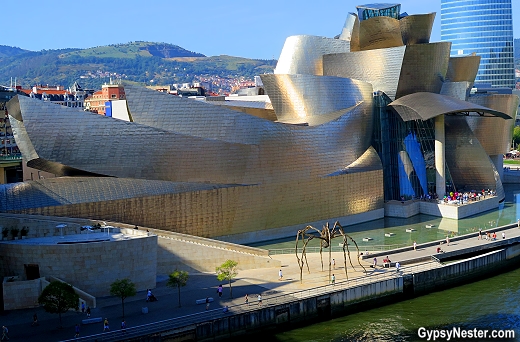
Pretty much everyone seems to agree that the city’s premier attraction is the Guggenheim Museum. So who are we to disagree? Usually it is the artwork inside the museum that is the main attraction, but at the Guggenheim it is possible that the most impressive work of art could be the building itself.

Acclaimed architect Frank Gehry intentionally designed the spectacular structure to blend in with its surroundings along the Nervion River. He was most certainly successful, yet somehow the building still grabs your attention.

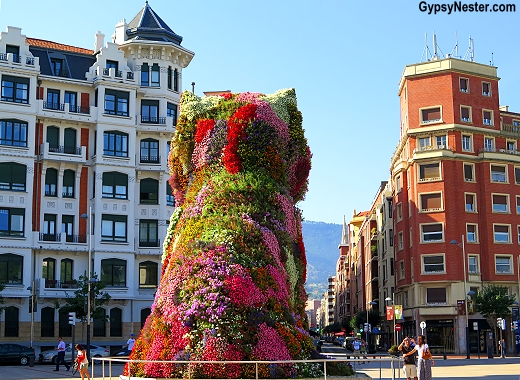
But that’s not all there is to pay attention to outside the Guggenheim, one of the most famous works in their collection, Puppy, by Jeff Koons, doesn’t get to go in the house because he might not fit. That’s right, this giant, flower covered West Highland terrier baby, known to the locals as the Flower Puppy, is over forty feet tall. There’s no way he’s fitting through any doggie door.

As for the art that is inside, like any world-class museum, the Guggenheim has several iconic works by masters such as Andy Warhol, Robert Rauschenberg, and Yves Klein. For us baby boomers, seeing Warhol’s classic One Hundred and Fifty Multicolored Marilyns was a huge thrill. Marilyn Monroe was a favorite subject for Warhol and this piece is just what the name describes.

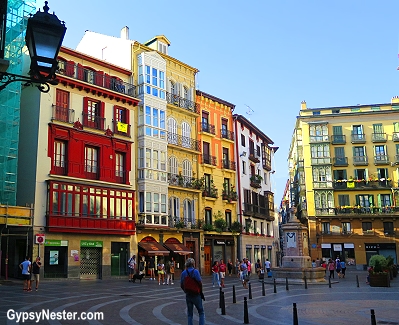
Bilboa’s other big attraction is the Casco Viejo, the old quarter. As was very common for medieval cities, the town was originally built within protective walls. The old town has now become more of a shopping and entertainment district, with plenty of interesting restaurants mixed in along the ancient streets.

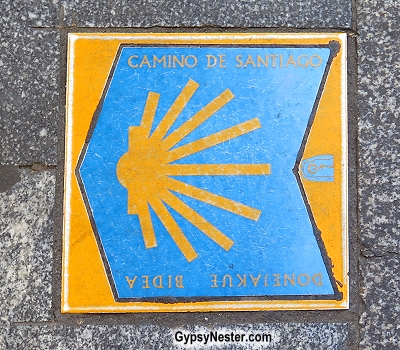
In the center of it stands the Basílica Catedral de Santiago, dedicated to Saint James because the northern branch of the Camino de Santiago runs right through the old town. If you are not familiar with the Camino, or Way of Saint James in English, it has been the route for millions of pilgrims from all across Europe, or actually the whole world, to travel to the Santiago de Compostela in Galicia, Spain.

The path is marked along the way with small symbols that look like a seashell to show the different paths that converge in Galicia.

Here’s hoping that our paths meet up in Bilboa, in Spain’s beautiful Basque Country.

David & Veronica, GypsyNester.com

Skiing Southern Style

Where in the world could we ski all day and make it back to the hotel in time to catch some rays by the pool? Only at America’s southernmost ski area… CONTINUE READING >> 

mtlemmon2

The day was the kind that draws snowbirds to Arizona, warm, sunny and dry. The sort of mid-winter day just made for MessyWeekend. We could have spent it by a swimming pool, but we had a different idea… skiing.

No, not water, but snow. How could we do that on an eighty degree desert day? By driving the short stretch up Mount Lemmon to America’s southern most ski area, Ski Valley.

ta9Even though the slopes are high enough in the Santa Catalina Mountains to get several feet of snow each year, the ski area only opens when conditions are right.

They don’t make snow, usually it is not cold enough, so Mother Nature has to provide the flakes.

Fortunately for us a big storm had just dumped about three feet of the white stuff up on the peaks a few days ago. So much fell that the road up to the ski valley had to be closed, but we, and a bunch of other enthusiasts from nearby Tucson, finally did get a chance to get to the fresh trails.

So we dug out our coats, hats, ski pants, and Mirrored Ski Goggles, and made our way up to the mountain.

ta1

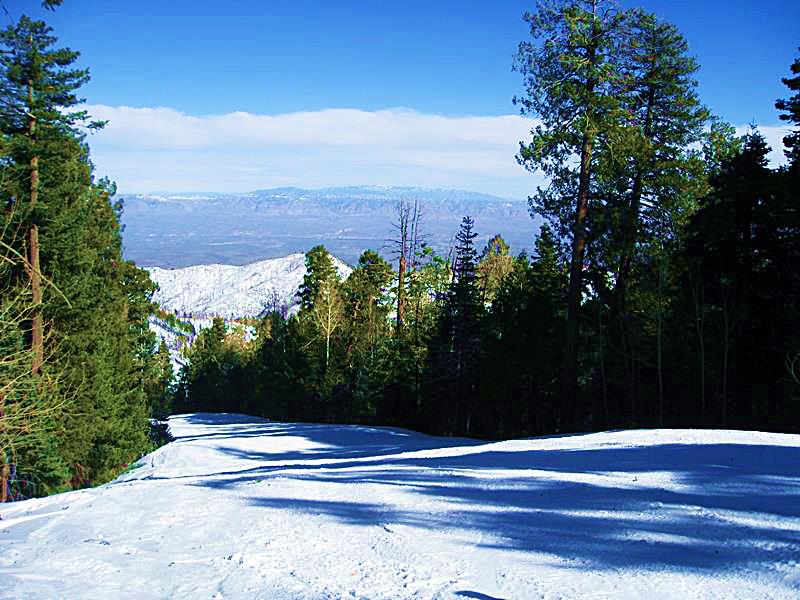
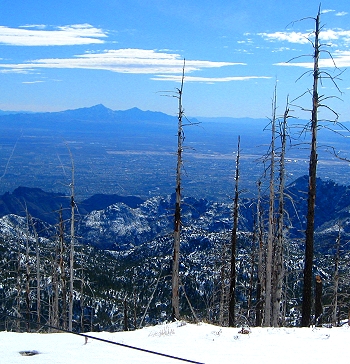
The drive up Mount Lemmon was gorgeous, going from sizzling arid desert to frigid alpine winter wonderland in less than an hour. At the top, the views were nothing short of spectacular. The perfect place to try out a new selfie stick. See more details here.

From this perch it seemed we could see  hundreds of miles stretching out before us.

ta8While that would have been worth the trip, Veronica could hardly wait to revisit her fear conquered skiing prowess. That is, until fate threw her a curve ball.

At 9,000 feet above sea level, it can be a little tough to breath.

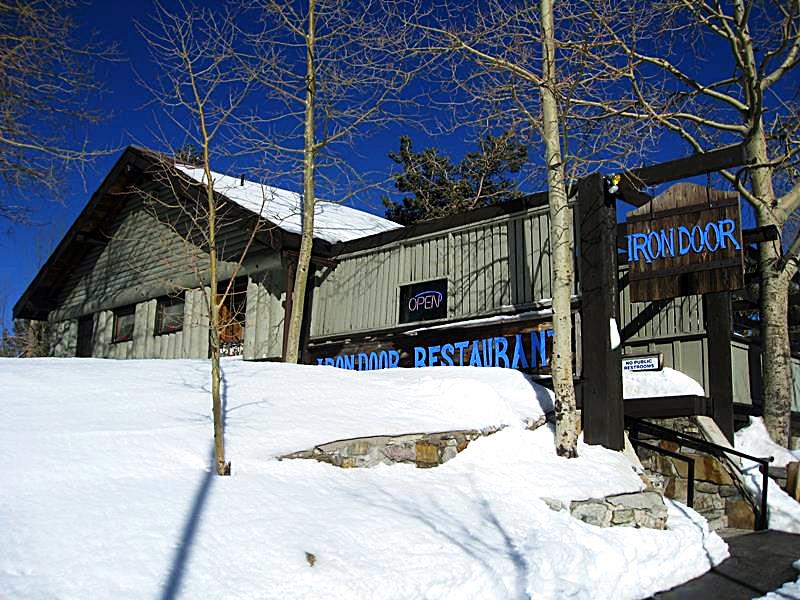
Never having done too well with high altitude, before she could finish her first run down the bunny slope she was dizzy and seeing stars… in broad daylight. She decided that working the snow bunny angle, complete with a toddy by the fire, at the Iron Door lodge might be a better idea.

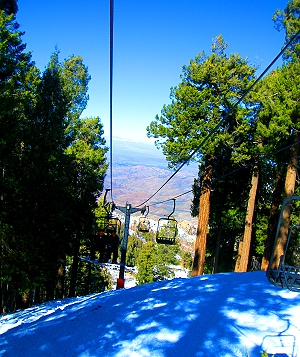
David, who grew up at over 8,000 feet high, didn’t seem to notice the altitude at all. He took directly to running down the slopes. It’s a small area, just one main lift and a half dozen trails, so he had covered the entire mountain in time to join Veronica back at the lodge for a late lunch.

mtlemmon3The Iron Door takes its name from a legend that a stash of gold mined from the mountain was hidden by seventeenth century Jesuit missionaries somewhere in this vicinity. They supposedly buried it in an underground vault secured behind an iron door.

The treasure has never been found, but we did find some pretty good soup.

After our meal David took one more schuss down the slopes before we headed back down from the high country and returned to the summer-like climate below.

It was like passing through all of the seasons in one day.

David & Veronica, GypsyNester.com

This post may contain sponsored links.

Going Coastal

Join us for an amazing adventure occurred along a rocky stretch of the California coast just south of San Francisco…
CONTINUE READING >>


While traveling, periodically preconceived notions are blown totally out of the water once a place is visited in person.

Our most recent notion deconstruction locomotion occurred along a rocky stretch of the California coast just south of San Francisco.

Carmel-by-the-Sea, as anticipated, is a quaint, artsy, picturesque little hamlet on the shore, but what’s up with all of the peculiar canine cordiality and electing such a tough hombre as mayor?
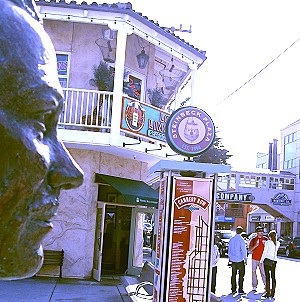
In nearby Monterey, the hustler-and-tough-guy laden Cannery Row of John Steinbeck fame we expected to encounter is virtually  unrecognizable in today’s colorful collection of restaurants, shops and tourist traps.

Established in 1770, Monterey served as California’s capital from 1777 to 1849 while a part of Spain and Mexico.

Through the years many of the state’s firsts happened here. The first printing press, newspaper, theater, public school and library all were in Monterey.

To aid the curious tourist, the city created the Path of History in the area around downtown.

Following the dotted line from the Custom House Plaza through flourishing gardens and historic buildings, we were treated to the rich past of an important city.
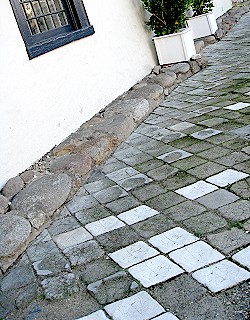
A highlight was the chance to walk on a section of the last whalebone sidewalk in the United States.

That’s right, there was a time when whaling was so common that the sidewalks were paved with their  bones, or at least the bones not being used as stays in the corset  torture devices used to cinch in a fashionable lady’s waist.

Back at the plaza we checked out The Monterey Maritime Museum.

There, we found a fantastic collection of artifacts from the area’s seafaring past.

The museum’s centerpiece is the first-order Fresnel lens from the Point Sur Lighthouse.
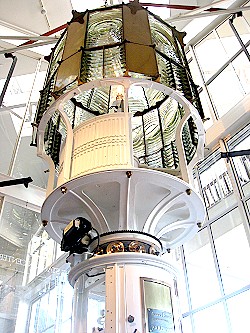
An elegant display of workmanship housing five hundred and eighty glass prisms that magnified the lamp enough to cut through the fog  and guide ships in from as far away as twenty-three miles out to sea.

We got lucky — seems like we often do — visiting the museum just before it closed for renovations.

In 2011, they will reopen and celebrate their 80th anniversary. David, aka “Bull in China shop,” didn’t break anything, we promise.

Really, it wasn’t our fault they had to close down.

The heart of this stretch of waterfront is The Old Fisherman’s Wharf. Built in 1870, it was quite the hub of commerce.

For years Monterey was the only Port of Entry for all of California. Every taxable shipment arriving by sea had to pass through customs at the end of the wharf.
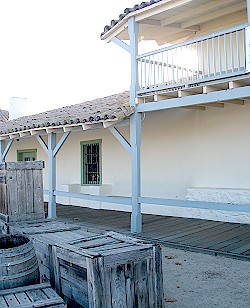
The Custom House itself dates back to 1814 and has served under three flags.

It is the oldest government building  in the state and holds the honor of being California’s Historic  Landmark Number One.

When the city of Monterey erected a new commercial dock back in 1926, the old wharf found new life as a wholesale fish market.

It remained a haven for fishmongers into 1960s when the decline of the fishing industry began the transition to tourism.

Until the mid ’50s this place was slingin’ sardines out the doors to the
tune of a quarter million pounds a year.
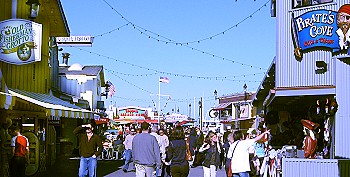
Sadly, due to overfishing and other factors that remain unclear, the sardines rather suddenly left the area and within the span of a few years most of the canneries had closed.

The impact was devastating, but the Row became famous as the setting for two John Steinbeck novels.

In January of 1958, the city decided to officially change the name of Ocean
View Avenue to its well known nickname, Cannery Row, and thus began the transformation from funky fish packing district into the tourist Mecca that it is today.
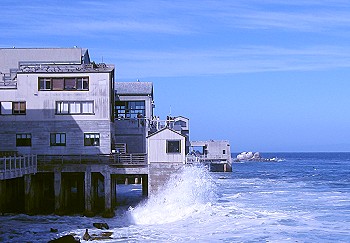
Off the street along the shore, clinging to the edge of the buildings, there is a walkway overhanging the water that offers incredible views and, as a bonus, the opportunity to get soaked by big waves.

Crashing up through the boardwalk, the water caught us completely off guard and gave us a good drenching.

Maybe it was a good thing — this way no one could tell that we had the p#@$ scared out of us.

Hearts a-pounding, we stood in the sun to warm up, regain our composure and act nonchalant — giving us an opportunity to enjoy the panorama across Monterey Bay.
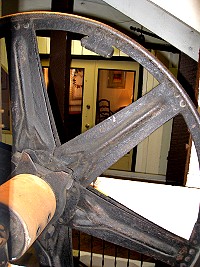
Drip-dried and back on the street, amongst the purveyors of fine souvenirs — crap shops in GypsyNester speak — and deep fried formerly-  finned critter eateries, we managed to find a few well preserved buildings with displays of the inner workings and final products of the old fish packing plants.

The technology, for its day, was impressive — quite a remarkable operation and demonstration of the ingenuity involved in conquering the logistics of processing all of those fish.

These days, much of the space is filled with art galleries and studios, adding a creative flair to the grand old buildings.
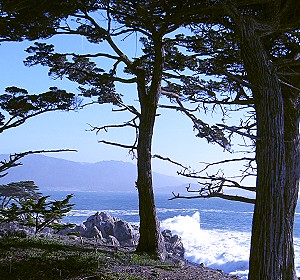
From Cannery Row, we drove down the coast a couple miles toward Carmel but were sidetracked when we noticed the exit for 17 Mile Drive.

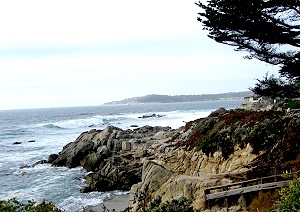
The famous toll road runs right through Pebble Beach and along the breathtaking cypress tree strewn coast.

The surf was up and the sun was out — couldn’t ask for a better day for a 17-mile Sunday drive.
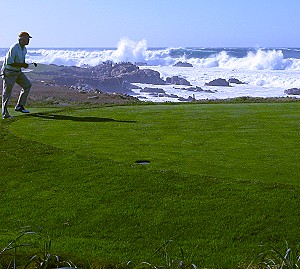
The views along the rugged coastline are unmatched and even though we aren’t skilled on the links, it’s way cool to drive through one of the world’s greatest golf courses.

Lord knows that’s the only driving we’d be doing there — there’s just way too much water and David plays with hazard-seeking balls.

The Drive leads into the endearing village of Carmel-by-the-Sea, usually shortened to simply Carmel, which is vying for the title of Most Dog-Friendly City.

Many hotels and shops allow canine companions to accompany their clientele.

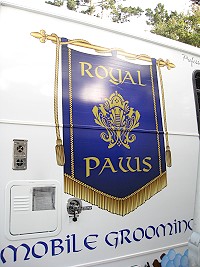
Spa packages are also available for fastidious Fidos, should the pampered pooches feel stressed out and in need of a massage to wind down.
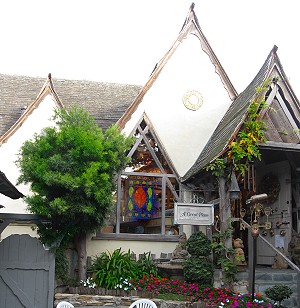
The local magazine, Coastal Canine, even has a restaurant review column written by Rover.

Here are his thoughts on the menu at Forge In The Forest from the fall issue:

“I was torn between The Quarter Hounder (for the hound with a hankerin’ for beef) and The Hen House Chicken Strips (five ounces of grilled and sliced boneless chicken breast).
I eventually requested the Good Dog (eight ounces of grilled and sliced New York steak) as it quite described my nature and was much less bourgeois.”

You will please pardon us if we hurl our “Hounders” over this disgusting display of doggie decadence.

Canine craziness aside, Carmel is a sweet little town that wouldn’t seem to need The Outlaw Josey Wales as mayor, but that’s what they got.
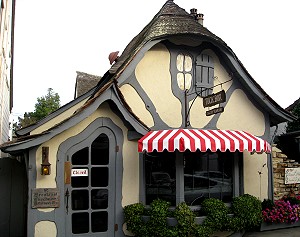
Back in 1986, Clint Eastwood got a burr under his saddle commenced to clean up Carmel.

Clint had had enough of his hometown’s archaic ordinance forbidding the selling and eating of ice cream on the streets and he was gonna take it down.

The issue became a high priority in his mayoral campaign.

So when it came time to tally the votes no one, not even Dirty Harry lost count.
Quaint little Carmel-by-the-Sea ended up with the hands-down, baddest mayor ever in the history of the whole wide world.

And rest assured, everyone eats all the ice cream they want — wherever they want — these days in Carmel.

Even the dogs.

David & Veronica, GypsyNester.com

See all of our adventures in California!

Glacier National Park in the Winter

With only a couple days for our explorations, we took a pass on the skiing in Whitefish and opted for a drive into Glacier National Park. Amtrak’s Empire Builder travels along the southern edge of the park and is an amazing way to see it in the winter, but we wanted to venture in a little deeper… CONTINUE READING >> 

Glacier National Park

Amtrak’s Empire Builder travels along the southern edge of Glacier National Park and is an amazing way to see it in the winter, but we wanted to venture in a little deeper.

So we rented a car and drove through Hungry Horse to the western entrance of the park and the famous Going To The Sun Road.

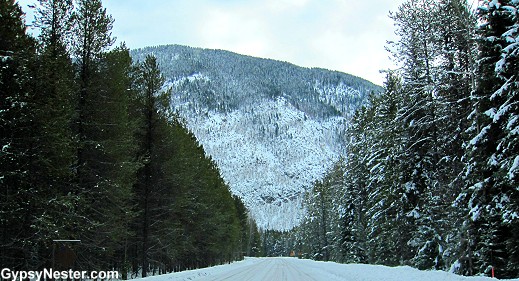
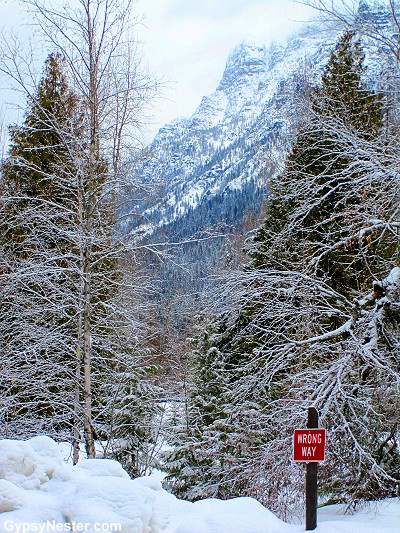
During the summer months the road traverses the park, climbing over Logan Pass, but once the snow flies only the first eleven miles are open.

Glacier National Park

Glacier National Park

While this seriously limited the amount of the park we could see, the upside was that there were no crowds.

Other than a handful of hardy souls we saw strapping on cross country skis to head off into the back country, we were all alone.

Glacier National Park in the Winter

Want even MORE pics of the park? Check out the views from the dome car of Amtrak’s Empire Builder (includes video!)

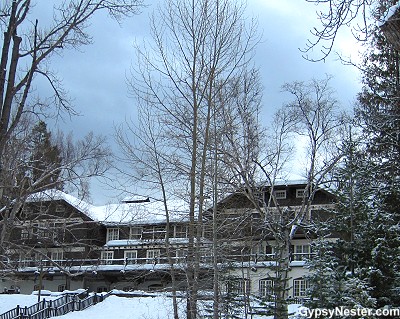
Lake McDonald Lodge in Glacier National Park

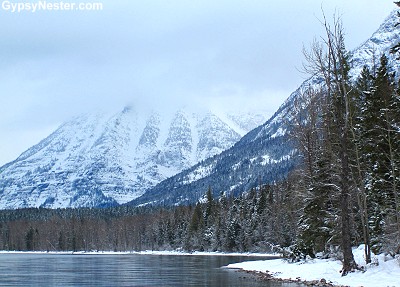
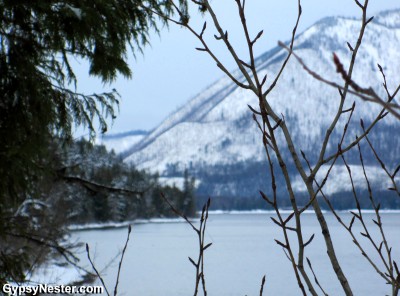
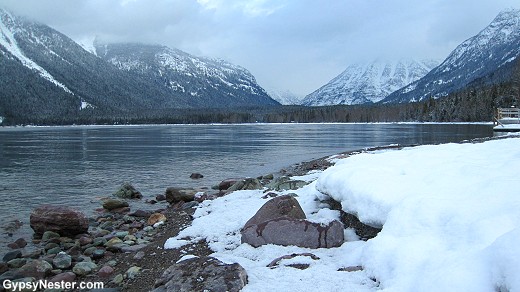
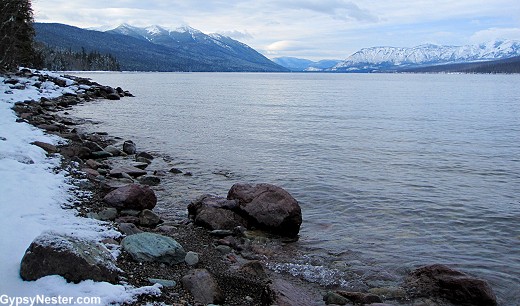
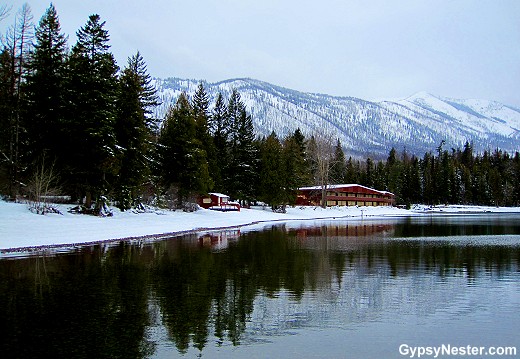
We gingerly managed our way up the snowy road, skirting along Lake McDonald all the way to the iconic Lake McDonald Lodge.

The hotel, designated as a National Historic Landmark, has been housing guests since 1914 when it was built as the Lewis Glacier Hotel.

However, it is only open in the summer, so we had the whole place to ourselves, at least the outside of it.

We trudged through the snow examining the entire grounds and then down to the lakeshore, where we found a view that was well worth the trip… and slips, slides, and falls.

Glacier National Park in the Winter

Glacier National Park

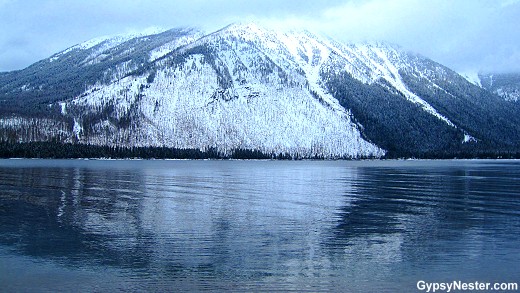
The panorama includes the whole lake and surrounding peaks, but our eyes, and cameras, were automatically drawn to the north end of the lake where Stanton Mountain, Mount Brown, and Gunsight Mountain loom over the water.

Glacier National Park

Glacier National Park in the winter!

Want even MORE pics of the park? Check out the views from the dome car of Amtrak’s Empire Builder (includes video!)

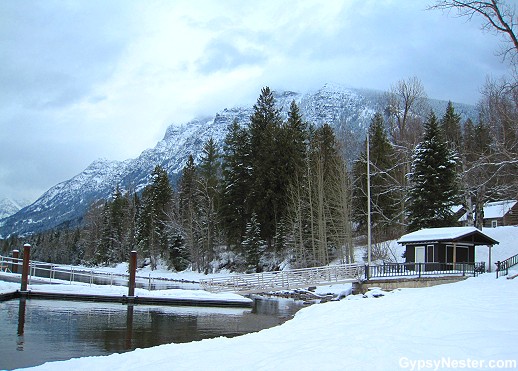
On the way out of the park we stopped at the Apgar Visitor Center and then got some great pictures from the boat ramp by the campground. Nearly ten miles of lake spread out before us from this vantage point.

Glacier National Park

David & Veronica, GypsyNester.com

See more:
Sled Dogs & Snow Ghosts – Whitefish, Montana in the Winter
A Winter Wonderland Aboard Amtrak’s Empire Builder